Search the site:
 go search this site

Plane Guard! A Kiwi Helicopter Pilot in Korea

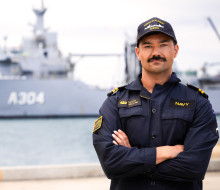
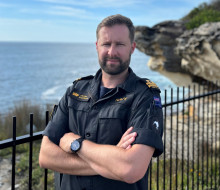
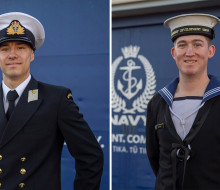
Roy and Elaine Hooker in their Otaki home, with their grand-daughter SLT Kim Hamilton RNZN. (Since this photo was taken Kim has been promoted to LT).

New Zealanders made a proud contribution to the Fleet Air Arm in WWII. But once the Korean War broke out, the Royal Navy looked again to the Kiwi naval aviators to help out. Roy Hooker, who had flown Grumman Hellcat fighters with No. 800 Naval Air Squadron in WWII, explains how the Korean War led to him flying helicopters….

In 1951 I got a letter from the Royal Navy. “The war in Korea has started and we are short of pilots.” I had just become engaged, but they said, ‘We’re taking all the families as well” so eventually I said “Alright”.

We got married on the Saturday and the following Friday we were in the RANGITANE [NZ Shipping Co. passenger and cargo liner] for six weeks going to England - our honeymoon! We had 21 Kiwi FAA aircrew; we took over 21 with all their families. Some more came later. I was on a short service commission in the RN, Lieutenant Hooker RN, and although we were paid by the British they paid us Kiwis at the NZ rates.

When we arrived in England we were billeted for only the first week and then had to find our own accommodation. I went on an Atomic, Biological and Chemical Damage Control course down in Portsmouth, before we were sent up to Macrihanish at the Mull of Kintyre, because they had reopened the air station there.

I started flying again in Harvards, then I was sent down to the south of England to do Air-Sea Rescue and I flew Sea Otters [a biplane flying boat] for a while. After getting through that course they just said “Oh hold on, you can forget about all the Sea Otters. You can jump the fence, you’re flying helicopters on Monday!”

I went to a little place called HMS SISKIM at Gosport, a lovely grass airfield beside one of the old forts with a moat and everything like that. I learnt how to fly helicopters there - the Sikorsky Dragonfly, S51 (and later on I flew the Hillers).

When I finished I was posted out to HMS OCEAN at Malta and my wife was just about due to have our baby. When I got on board the Captain said ‘go straight back to England’! The birth went all right, so I was back in Malta waiting for OCEAN to come in, to get a bit of a refit.

While I was at Malta I was flying one day and one of the chaps with the Sea Fury squadron went in to the sea. I flew my helicopter down and I was with a photographer at the time, so I said “Well you’re the winchman, how are we going to pick up this bloke?” The ditched pilot happened to be one of my cobbers (another Kiwi) and that was the first pick up in Malta by helicopter.

We had a couple of other Kiwis flying with us in Malta. One stayed in Malta and my cobber came out [to Korea] but he went home earlier on. He had a bit of trouble health-wise, so I was the only Kiwi on board OCEAN, and the only Kiwi flying helicopters out there (in Korea).

Eventually the OCEAN sailed for Korea. We stopped at Trincomalee then went straight through to Japan and rearmed at Sasebo. Off Korea we were flying strikes the whole time. We went out on patrols for two weeks at a time and then came back and rearmed, refuelled and we’d enjoy some recreation.

But while our aircraft could bomb anywhere in the North, our ships weren’t allowed to go past the 38th Parallel because the Soviet Union warned the United Nations [while the truce negotiations were on]. So we went up as far as the 38th Parallel flying strikes then we would turn back again and come down the coast. I’ve thought to myself over the years, “What a useless bloody war that was”.

We had the big battleship USS NEW JERSEY which was used for bombardments ashore [with OCEAN’s aircraft spotting] and we had the Dutch destroyers as well as the Commonwealth ships.

Roy was flying a Sikorsky S51 Dragonfly, one of the first operationally successful helicopters. He explains that the pilot sat at front centre, but aft of him the fuselage was a little bit wider:

“…room for one really but you could pick up two. There’s a seat behind the pilot, on the starboard side and on the port side there’s nothing because you sit on the floor. We did a lot of winching because we took the Padre round, we took the Doctor round [the other ships] and that was our sort of routine.”

I did what they called plane guard which was flying it in position, in case anybody went over the side. We had an occasion where we were working with HMS UNICORN, which I’d flown on in 1943. One pilot went over the side so we went and picked him up and here it was 1953 and I landed on UNICORN again!

We were refuelling one day and we had a frigate on the starboard side of the tanker and we were on the port side and somebody said “Man overboard” and they were pointing astern of our ship. I was on duty and I started up a helicopter and went out to him. This was a breeding ground of the Hammerhead sharks, I used to fly over them and I’d think “Gee they’re whoppers”.

Anyhow this young chap, he’d jumped over the stern - a suicide attempt. It was ‘Up spirits’ at the time and he gave his tot to his mate then he just walked along to the Quarterdeck and just jumped over. He’d had domestic trouble and he was only a young bloke. I flew out and we saw him out there and the sea was very calm but when we put the strop down on the wire for him to climb into, he wouldn’t touch it. I was making an awful ruffle all over with the rotor blades on the water and I said “I’ll just back off a while”. My winchman said “Why are you backing off sir?” and I said “Have a look over there” and there were two sharks’ fins. I said “He’ll see those in a minute.” it was clear water then and he started waving and waving and waving so we came back and picked him up. Anyhow when I got back to the carrier they took him aside and the doctor and a couple of men took him down below. He wasn’t prepared to wait for the sharks - I’ll never forget that.

One visit to Sasebo we couldn’t go alongside, we anchored out. At Kure we could go ashore and the wharf we were at was the wharf built for the big Japanese battleship, the YAMATO. That wharf accommodated everything; they actually had a host of ships coming in there for the Army boys and Prisoners of War who were being released. So we went up to Yokohama and we were the largest British warship there since they signed the Surrender [in 1945].

We opened the ship to visitors and we let the locals on board ship to have a look at everything. Mind you all the aircraft were covered over but they were allowed to walk around and we had two gangways up there and when it was coming near closing time they were crowded in, they pushed on and they shoved in and they did everything. We couldn’t get them off, so we had to set the hoses onto them! They all went off then.

We celebrated the Queen’s Coronation out there with a flypast - we used rockets under the wings [to help launch the Sea Furies while in harbour] and they took off from a standing start.

Then there was a Coronation parade onboard, and we celebrated Ed Hillary getting up the mountain [Mt Everest] too.

The next month [July 1953] we were making preparations for any peace arrangements. I was given the job of going out to HMS BIRMINGHAM [a cruiser] and landing on the quarterdeck. After a long wait, while they trained the after turret to one side and depressed the guns below the rotor height, I landed on and it was the first time it had been done. I picked up the Admiral and the Secretary of the Navy, pretty high-price blokes, so they did whatever they were supposed to do in a conference with our Captain and then I had to take them back. The Admiral came round and shook my hand and said “Well thanks very much, that’s the first time I’ve ever had that done,” but I nonchalantly said “Oh yes” as much to say I’d done it hundreds of times, but it was the first time I’d ever done it too!

When the negotiations for the peace were on, they drew a line across and they put a building exactly half way and this line went through the building, across the table and out the other side [at Panmunjon].

Well the peacekeepers at that time were an Indian regiment and they’d come in by their freighter into Inch’on and we [OCEAN] had anchored there. But the soldiers were not allowed to land into South Korea and march up [to the DMZ]. They came over from their freighter by boat to us and all our aircraft had been taken out of the hangar and parked forward. They put the regiment into our hangar. There were about 600 of them or so and they were going to be taken by helicopter and I said to myself, I said “It’s going to take us a hell of a long while to shift these blokes.”

But the Americans assembled half a dozen big helicopters and they came in two at a time and my oppo and I, we landed them on. They brought up enough soldiers from the hangar to fill those and they took off and then another two came and this went on all day. They were allowed to land in an area on the DMZ in no man’s land and that was the only way they could get the peacekeeping force in.

After the deployment, we decommissioned the ship in Plymouth and then I went back to Scotland to Tantallon (just outside Edinburgh). I did calibration work for the radar people and I used to go out to Bass Rock and fly around and hover at various places where they wanted me to stop. I saw the All Blacks play at Murrayfield and I had free tickets, thanks to Ron Jardine and Terry McCrane!

TECH SPECS: DRAGONFLY HR1 AND HR3. Sikorsky S51

  • BUILT - in the UK by Westland under licence
  • ENGINE - Alvis Leonides 50 of 550hp
  • ROTOR DIAMETER - 49ft (15m)
  • LENGTH - 57ft 6" (17.6m)
  • HEIGHT - 21ft 11" (6.7m)
  • LOADED WEIGHT - 5,870 lbs (2660kg)
  • MAX SPEED - 103 mph (165km/h)
  • CRUISING SPEED - 81mph (130km/h)

No 705 Sqn formed at Gosport 1950. Initially the British carriers off Korea had a USN plane-guard Dragonfly helicopter attached, but OCEAN’s 1953 deployment was one of the first with an integral FAA plane guard flight.

Copyright © 2012 Royal New Zealand Navy | RSS Feeds | Help | Legal Notices | Feedback |  newzealand.govt.nz