The Sub Antarctic Islands
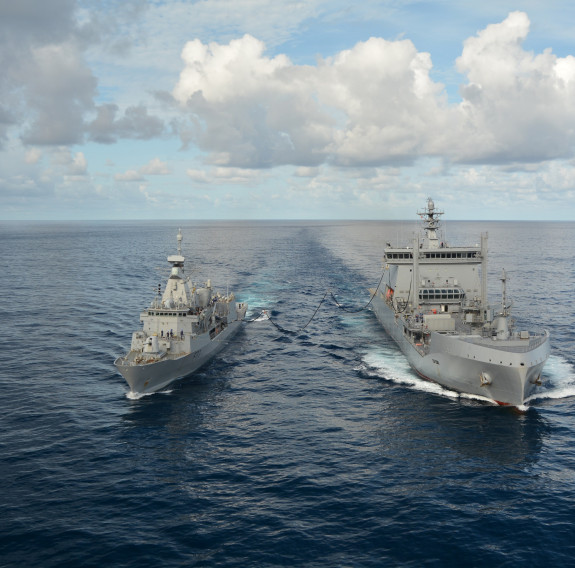
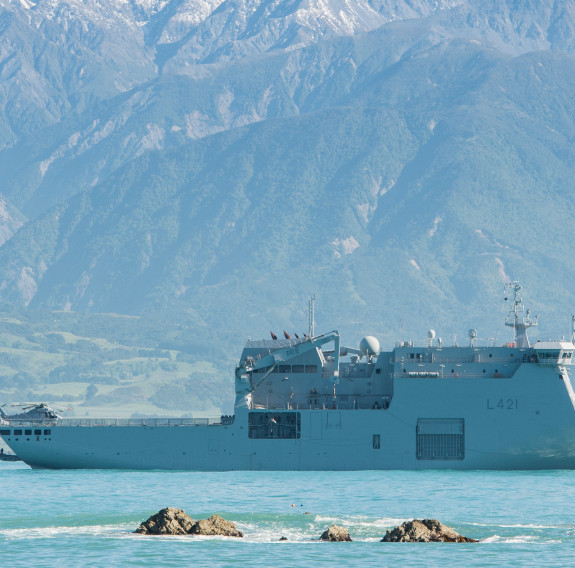
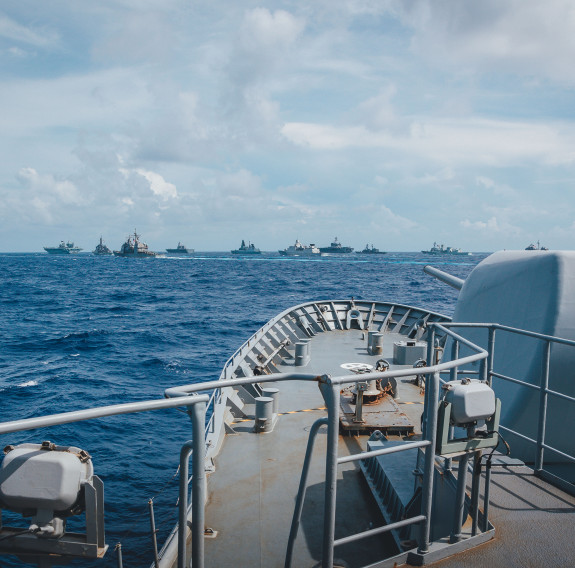
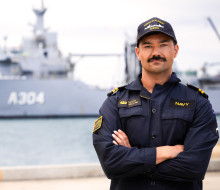
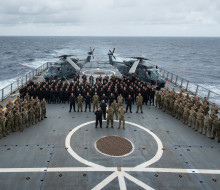
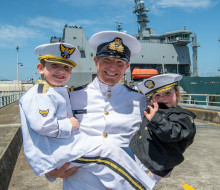
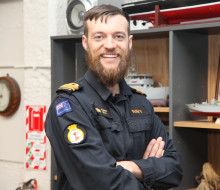
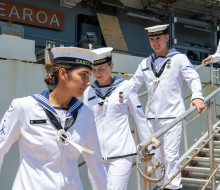
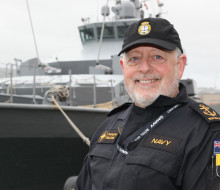
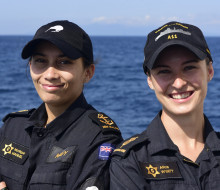
HMNZS TE KAHA deployed in the Sub Antarctic Islands, about 500km south of Stewart Island, working with the Department of Conservation (DoC). Along with the DoC party were staff from the Royal Society of NZ, the Tauranga Girls’ College science team and several journalists [and at least one ‘new Kiwi’, see article TE KAHA].
-Anchors Away Down South
By Stephen Jaquiery, Otago Daily Times
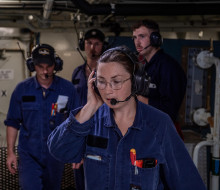
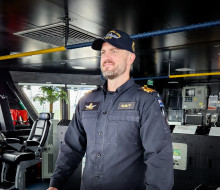
First weightless, then cork-screw crushed into my bunk, a night-long rhythm broken often by sickening, wide eye crashes that send shivers down the length of the ship. TE KAHA is a 118m-long frigate, the pride of New Zealand’s Navy, and her crew of 179 were being given a little taste of one the Southern Ocean’s moods.
When she left Bluff on Operation Endurance, with a complement of Department of Conservation staff, the sea was like a mirror. As her gas turbine engine cranked up she ripped south past Stewart Island at 27 knots. But with no landmass to impede their charge, storms rip across the Southern Ocean’s latitudes, making sea travel unpredictable, at best. The prevailing westerly wind can rapidly whip a tranquil sea into a frenzied and unforgiving cauldron. The following night TE KAHA was well battened down as she reduced her speed to punch into the 50-knot winds, 6m swells, and shudder through regular 10m peaks.
The joint mission was to deliver a large quantity of boardwalk, to Campbell and Enderby Islands, restock fuel dumps for search and rescue missions, and look for any spread of the invasive seaweed undaria (recently discovered at the nearby Snares), among other things.
The Department of Conservation, which is charged with managing and protecting the islands, enforces strict quarantine procedures for anyone landing on the islands. This is to ensure there are no accidental introductions of pests, plants or pathogens. Before embarking in TE KAHA, all passengers were subjected to a rigorous inspection of clothing and equipment, particular attention being paid to the inside of pockets and Velcro where small seeds could go unnoticed. Boots were also dipped in Vircon, an antibacterial solution, as a guard against pathogens, before leaving the ship.
At Campbell Island
Campbell Island, the most southerly of the sub Antarctic group at 700km south of Bluff, was covered by ominous black clouds as we motored between the cliffs guarding the entrance to Perseverance Harbour. The harbour is named after a sealing vessel that both discovered the island in 1810 and was wrecked there in 1829.
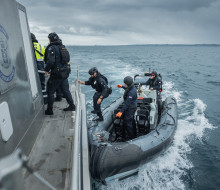
The landing has a small concrete jetty, making Campbell the only island which offers the luxury of dry feet. All of the others require wading from an inflatable to shore. The jetty is also a favourite resting place for the boisterous sea lions, giving new visitors, in particular it seems, an unnerving welcome involving a gruff voiced charge, with mouth wide open and yellowed teeth exposed, to within a metre or less.
Most noticeable on Campbell Island is the lack of trees. A band of very dense scrub covering the lower slopes changes to Antarctic snow tussocks above. The single introduced spruce tree on the island is listed in the Guinness Book of Records as the loneliest tree in the world.
From the landing, past the amorous sea-lions, through the tight scrub, you take a boardwalk in the shadow of Beeman Hill to the snow tussock where, scattered like confetti, southern royal albatross nest. Campbell Island is the stronghold of the species with about 14,000 breeding pairs. They vary only slightly in genetics from the northern royal albatross. That week, with no chicks yet hatched, some birds sat on nests among the megaherbs, juveniles were gamming (a courtship display for next year’s mating), while the sky was alive with gracefully soaring birds whose whoosh can be heard as they swoop close by.
Even when sticking to the boardwalk, put in place to minimise impacts on the fragile peat soil, it is often hard to obey the DoC instruction to stay 5m away from the wildlife. Not only do the birds move freely around and cross the boardwalk, but some have built their nests right beside it. Peter Moore, from the Department of Conservations’ research and development division, is into his fifth year leading a team studying the productivity and survival of the albatross. He has no problem with limited numbers of tourists visiting the island as long as disturbance is kept to a minimum and they obey the 5m rule.
Numbers of the birds have built up but the population growth has levelled off in the past 10 years. Moore says long-term changes in the environment are the albatross’ biggest concern, brought on by the impact of humans on the global environment far away from the island.
In the Auckland Islands
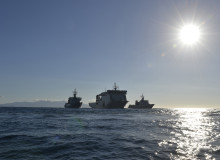
Entering Carnley Harbour of the Auckland Islands, some 460km south of Bluff, the most obvious feature is a cruise ship. Several inflatable boats zip around as tourists enjoy a sub Antarctic experience. The MV ORION is one of five cruise ships visiting the islands this year. Only 600 visitor permits are issued a year, though cruise ship operators are lobbying to have the number increased. Strict quarantine is observed for both the passengers and the ship, it must have its hull inspected by a diver before entering these waters and a Doc representative is present on every trip. This was the ORION’s second visit to the sub-Antarctic islands on this cruise. Gathering pack-ice meant they could not enter the Ross Sea so they called in on the way back to port.
On Enderby Island
At the northern end of the Auckland Island group is Enderby Island, a sea lion capital which has seen much human activity over the years. It was once a sealing base, was used by European and Maori farmers and also as a haven for shipwrecked castaways.
A waist-deep plunge into the 9°C ocean is soon forgotten as Sandy Bay, littered with sea lion bulls, females and pups, leads up to a low-growing rata forest and out on to hummocky moors where albatross nest and megaherbs flourish.
While two species of penguin breed on the Auckland Islands, the most conspicuous are the yellow-eyed penguins on Enderby, with 250-300 breeding pairs.
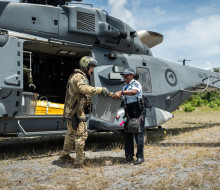
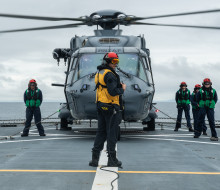
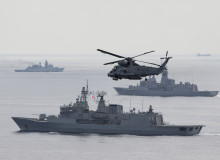
Once the boardwalk and fuel were unloaded, and the helicopter and inflatable boats were stowed it was time to leave the sub antarctic island group with its unique flora and fauna. We are richer with our photographs and experiences, and the islands, no poorer for our passing.
Previous | Contents | Next