Defence Technology
By ENS Nicky Turnbull RNZN
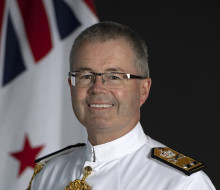
The Defence Technology Agency (DTA) provides support in the field of science and technology to the NZDF and Ministry of Defence. DTA is located in its own compound in the North Yard of the Naval Base and employs a range of scientists, engineers, technicians and support staff, who work together to ensure that the NZDF has the technologies and skills to meet operational demands. At present there are about 80 people at DTA but that number may increase over the next few years. The Director DTA, Stephen Wilce, is also the Chief Defence Scientist (CDS) and he is responsible to CDF and the MoD as Chief Scientific Adviser and NZ Principal to ‘The Technical Cooperation Program’ (TTCP). He is equivalent in status to a Flag Officer.
Through DTA, research and information is exchanged with other members of the military science community, and with the wider scientific community, which enables the NZDF to take advantage of the research done by others. DTA is designated a Shared Services organisation and the branch comes under HQNZDF Organisational Support for its daily activities. Often technology or operational systems that are available commercially are not best suited to our specific needs and so better options can be developed from the research conducted within the DTA.
The TTCP
DTA works closely with defence scientists from Canada, the US, the UK and Australia through The Technical Cooperation Program, to share data and research. The DTA represents the NZDF within the programme, working on common projects. Thus costs and resources for common research programmes can be shared amongst the participating countries, and the results used by all involved.
For the Navy, our Naval Science Plan is set by ACN(Cap), DNCR and the Naval Science Liaison Officer (NLSO). The details of the programme are worked through by the Naval Science Committee every 6 months, where updates of the projects are presented, new ideas are tabled and results can be discussed. The NLSO oversees the day-to-day management of the projects from within DTA and maintains the channels of communications to interested parties within the Navy.
Naval Engineering Support and Materials Research
The Naval Engineering Support project team work closely with FEC to investigate and upgrade engineering systems on board. The NES project team are also closely tied in with research being conducted into naval materials and their applications within the fleet.
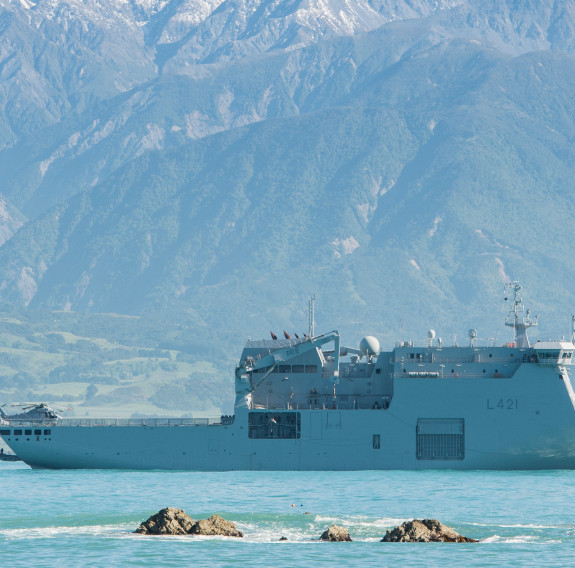
LCM Safety. An example of DTA’s work for our Navy, is the LCM project. Questions had arisen about the safety and performance of the LCMs aboard Canterbury. A project was set up to specify and resolve these problems:
- was there excessive strain placed on the lifting lugs on the LCMs, and
- why had cracks developed at the hinges on the bow ramps?
The DTA was tasked to investigate any safety issues or operational capability issues before people or equipment were put at risk.
By using Finite Element Analysis (FEA) to make a 3D model of the parts, taking into account the material it was made from and the forces that it might be loaded with in a worst case scenario, DTA staff were able to establish where problems might occur. FEA modelling can also be used to check planned solutions for accuracy, it can quickly analyse a range of loading scenarios.
In the case of the lifting lugs, the loading was not occurring in the exact manner expected. The forces were acting at slightly different angles, and this placed extra strain on the lugs other than what was originally anticipated. The proximity of the deck-house to the lifting lugs also posed a problem as the corner of the deck-housing carried additional load transferred from the lifting lugs. Some non-destructive testing and inspection of the parts revealed that some cracking was starting to appear in the areas predicted by the FEA. DTA was then able to use the FEA technology to come up with an alternative to the original design to alleviate these problems.
By-products of halon gas. The hydro-fluorocarbons used for fire fighting on board warships are known to leave hydrogen fluoride in the compartment once the fire is out. This gas poses a risk to sailors on re entry to the compartment, so it’s vital that the right safety clothing is provided and the safest and most efficient method of clearing the remaining gases from a compartment is utilised.
Corrosion trials. A trial investigating the corrosion rates of the friction steel welds used to bond the superstructures to the main hull structure of the new IPVs. The trial involves welding small samples of the base metals together. These are then set up in a testing rig which will immerse them in salt water for ten minutes every hour. While out of the water they are held at a constant temperature and humidity level in an environmental testing chamber. This cycle will continue over several weeks. The testing process accelerates the corrosion of the metals, and so the results and effects can be examined in a much shorter time frame.
Alternative options for launching RHIBs and the most appropriate quick-release shackle. Research was done into the forces loaded onto the system when a RHIB is towed alongside a ship. HMNZS Kahu towed a RHIB to enable DTA staff to measure the forces involved. Conversely the maximum force that a RHIB can exert was measured by tying a RHIB to the wharf and using it to pull on the line. Tests were also done on the lines and shackles, to find the maximum load they could support.
This project includes failure analysis of parts - to determine why they failed and what can be done to stop future failures. One example of this analysis is the A-bracket bearings from Te Mana. When she was deployed to the Gulf, the material of the bearing was corroded due to hydrolysis. This could have been due to a number of different factors; DTA staff will consider all the factors and look at any past problems involving this part, and hopefully discover why the problem occurred and how it can be avoided or minimised in the future.
Next month: Looking to the future: DTA’s Naval Projects.
Previous | Contents | Next